


Typically, sewage from the drainage system is collected into a designated sewage sump located in the basement or parking area, from which it is discharged into the municipal sewer network.
A standard sewage sump for restroom wastewater typically has a capacity of approximately 30 m³ and is equipped with two submersible sewage pumps—one operating while the other serves as a standby—to handle automatic discharge.
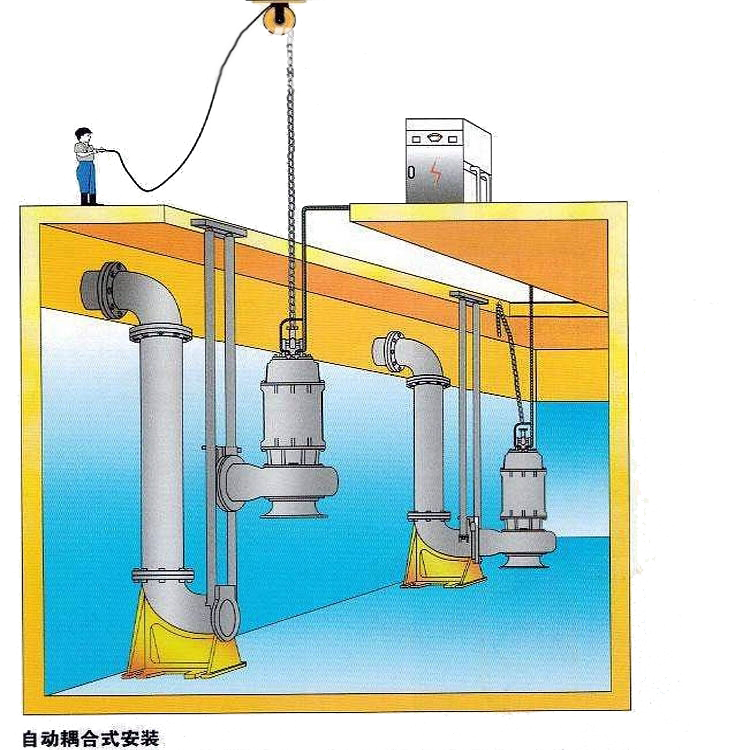
The above represents the standard configuration for a sewage discharge pit.
It includes the following components:
1. Submersible Sewage Pumps (x2): Options include standard submersible sewage pumps, grinder pumps (with cutting mechanisms), and agitator pumps. Pump selection depends on the nature of the impurities, as do impeller choices (e.g., open impellers, vortex impellers, dual-blade cutters, etc.).
2. Float Switches (1 or 2): Selection depends on the control panel specifications. Various types are available—such as those with corrosion-resistant cables, teardrop shapes, or oversized designs—chosen based on the specific impurities present.
3. Coupling Device: Selected based on the pump model and pipe diameter; these are typically supplied by the pump manufacturer.
4. Guide Rails: Tubular rails (made of iron or stainless steel) used to guide the pump's vertical movement and secure it in place.
5. Lifting Chain: Used to hoist the pump; specifications are determined by site conditions, pit depth, and the height of the manual hoist.
6. Manual Hoist: Used for lifting the pump; selected based on the pump's weight.
7. Cable Conduit: Used to secure and protect the electrical cabling.
8. Control Panel: A cabinet for automatic level-based discharge control. Options range from dedicated pump control panels to custom-assembled units.
9. Discharge Piping, Check Valve, and Gate Valve: Configured according to the pump and piping system requirements.
The items listed above are essential components for a sewage pit.
Additional features—such as deodorization units, disinfection systems, and back-flushing mechanisms—may also be included. While more features offer greater functionality, they also increase the likelihood of maintenance issues.
This coupling method facilitates pump maintenance. Given the high level of impurities in sewage, pumps are prone to damage from impeller jams, overheating, or corrosion; the coupling system allows for rapid pump replacement without requiring personnel to enter the sewage pit.
Other current solutions include integrated sewage pumping stations and stainless steel sewage lifting units, which operate on principles very similar to those described above.
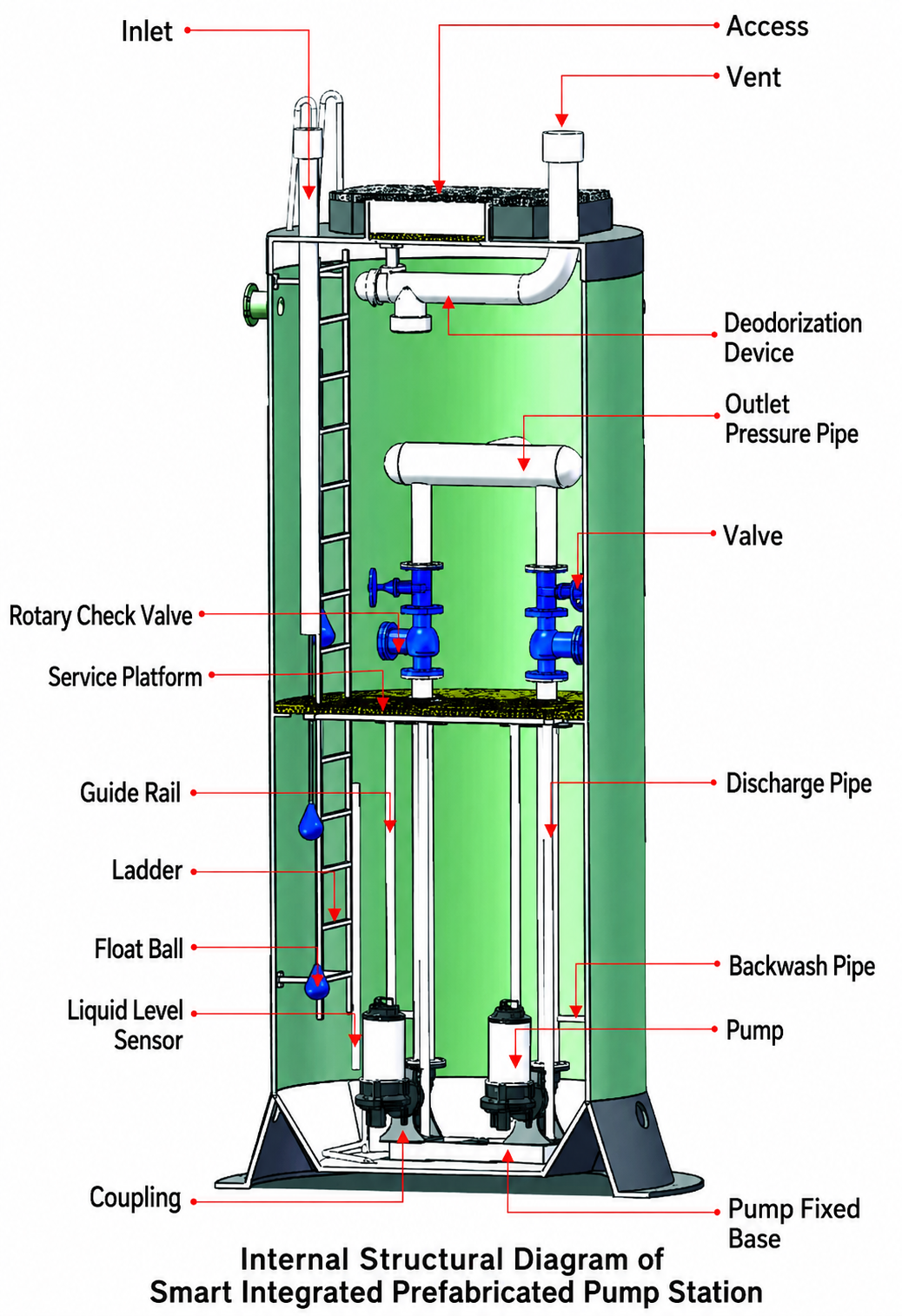
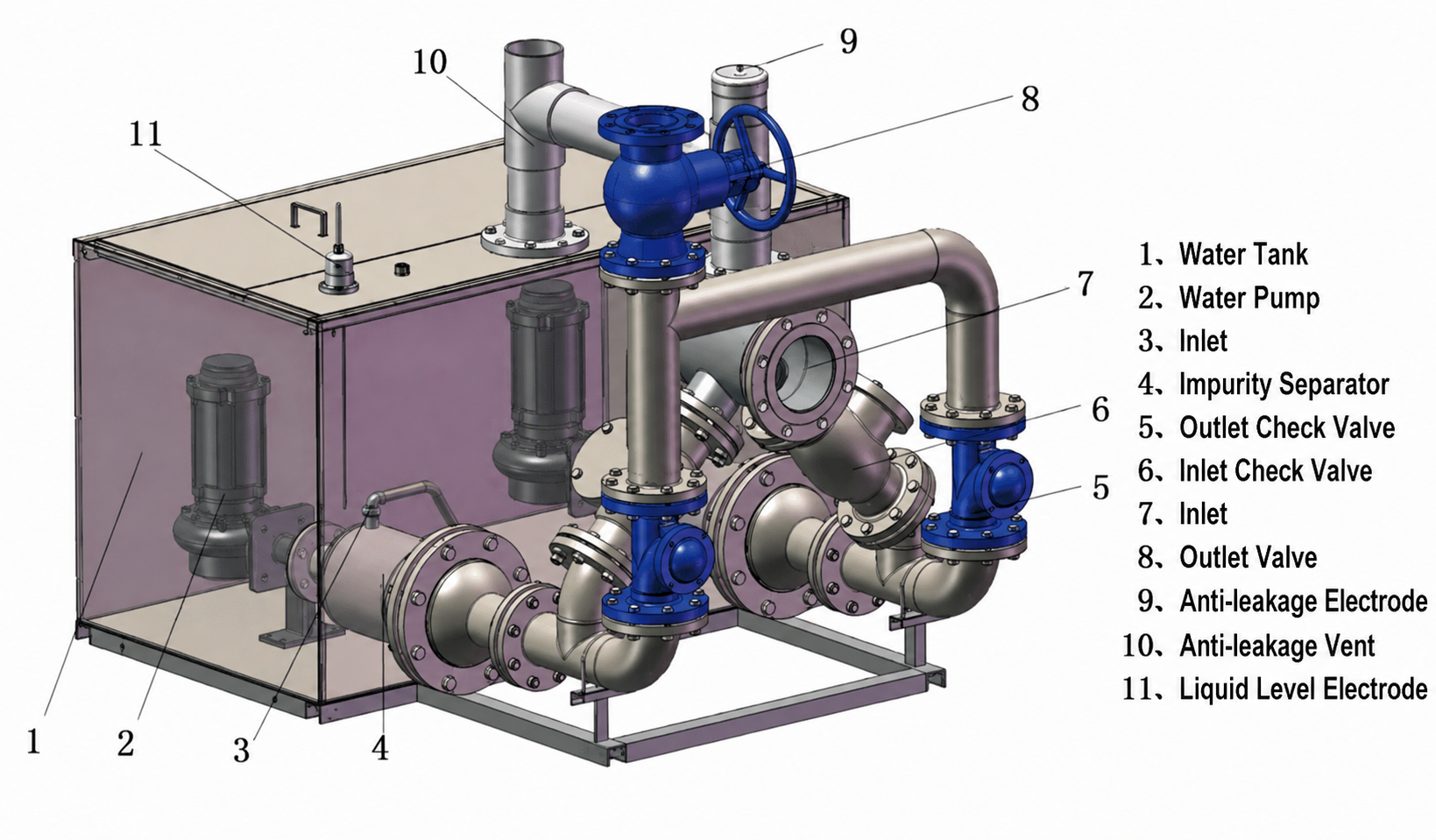
Sewage composition varies widely; selecting the right pump for long-term reliable operation requires considering factors such as the specific impurities present and the fluid's specific gravity. For instance, wastewater from hand-washing—which is free of solid debris—can be handled by a standard sewage pump with a closed impeller and a basic float switch. If the sewage contains items like toilet paper (e.g., from restrooms), a pump with a cutting mechanism is preferable. For wastewater containing kitchen scraps, a non-clogging pump featuring an open impeller with agitation capabilities is the best choice.
Ultimately, the specific pump selection should be based on an on-site assessment of the conditions.
