


RO reverse osmosis equipment is an efficient water treatment technology that mainly uses the high pressure generated by a water pump to drive water molecules through a semipermeable membrane, thereby separating impurities.
Removes harmful substances such as heavy metals, bacteria, viruses, and pesticide residues from tap water for direct drinking water applications.
The above is a brief introduction to RO reverse osmosis equipment. Regardless of its advantages and disadvantages, health is priceless.
Next, let us look at the detailed process flow of the equipment. First, take a look at the diagram.
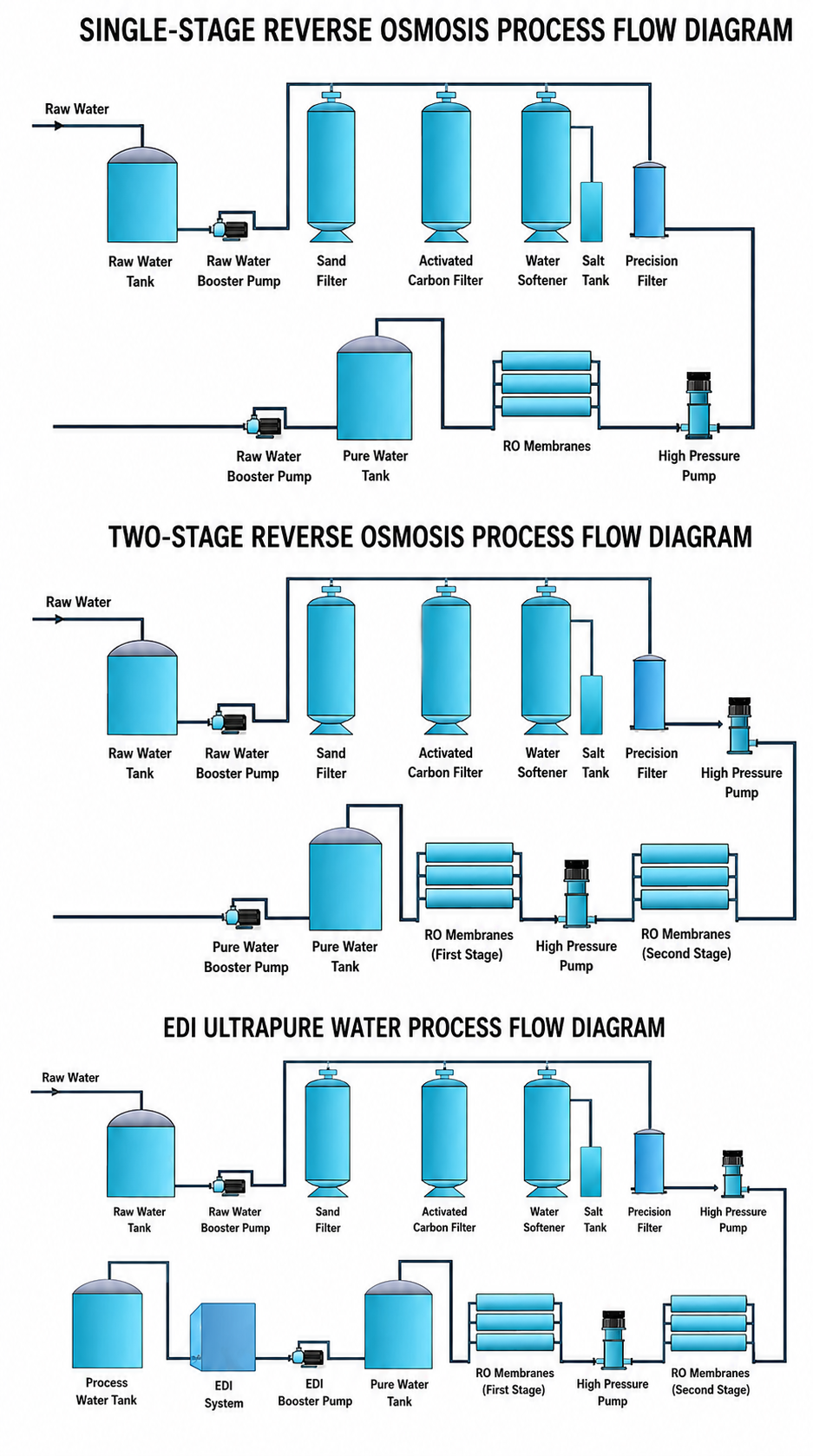
From the diagram above, we can see that commonly used reverse osmosis equipment is divided into three types:
Single-Stage Reverse Osmosis Equipment: Commonly used in areas with relatively good water quality and in applications where water-quality requirements are not particularly high, such as communities, schools, and farms.
Double-Stage Reverse Osmosis Equipment: Commonly used in areas with relatively poor water quality and in applications with higher water-quality requirements. It meets national drinking water standards and is widely used in food and processing industries.
EDI Ultrapure Water Equipment: Commonly used in industry and manufacturing. This water is not recommended for drinking; it is neutral water and is characterized by its non-conductivity. It is widely used in semiconductors, pharmaceuticals, and laboratories.
Double-stage reverse osmosis equipment adds one more RO reverse osmosis stage to single-stage reverse osmosis equipment, while EDI ultrapure water equipment further processes the water after double-stage reverse osmosis and uses electrical deionization through an EDI unit to produce ultrapure water.
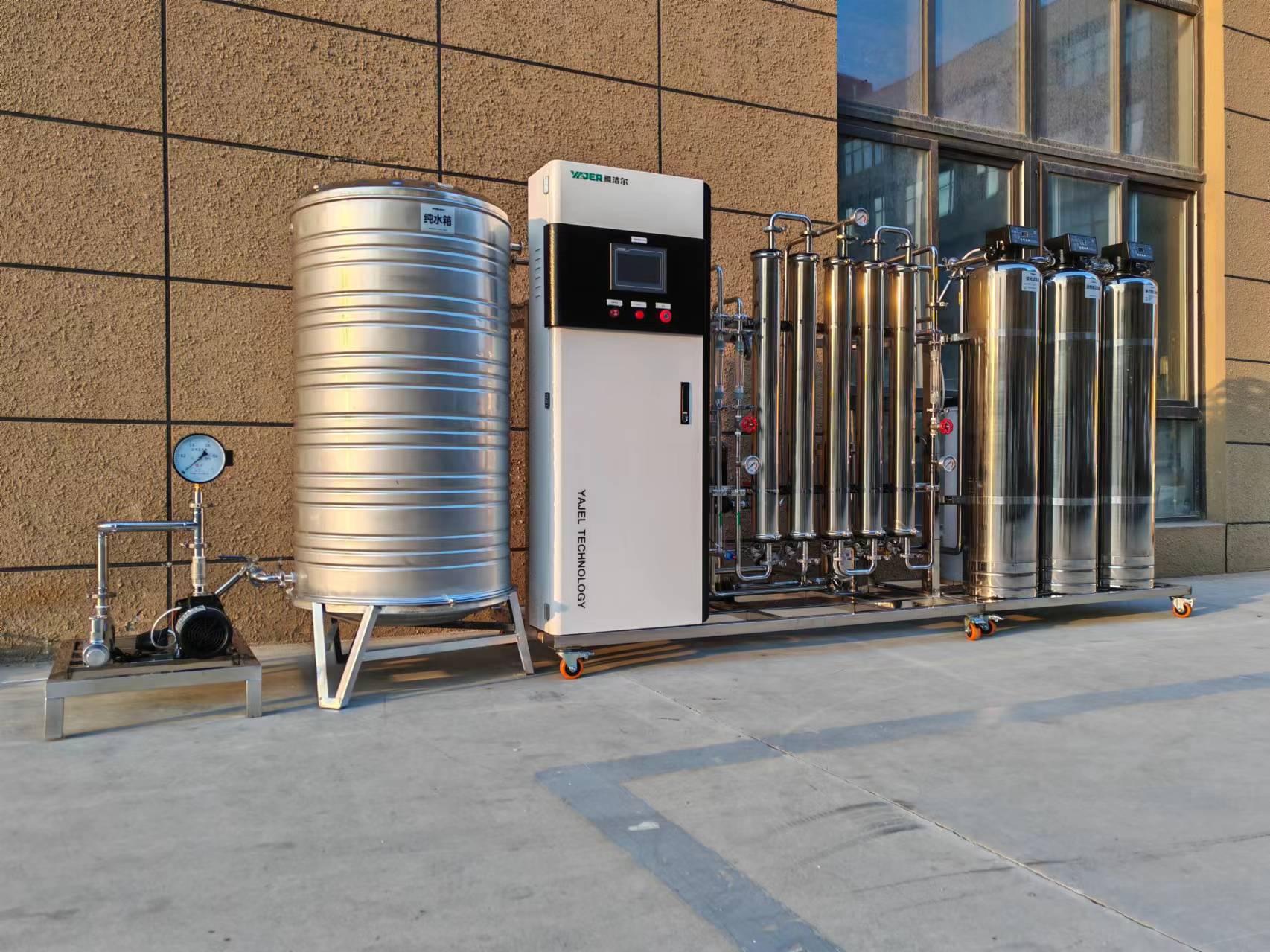
Functional Introduction to the Main Components of Reverse Osmosis Equipment:
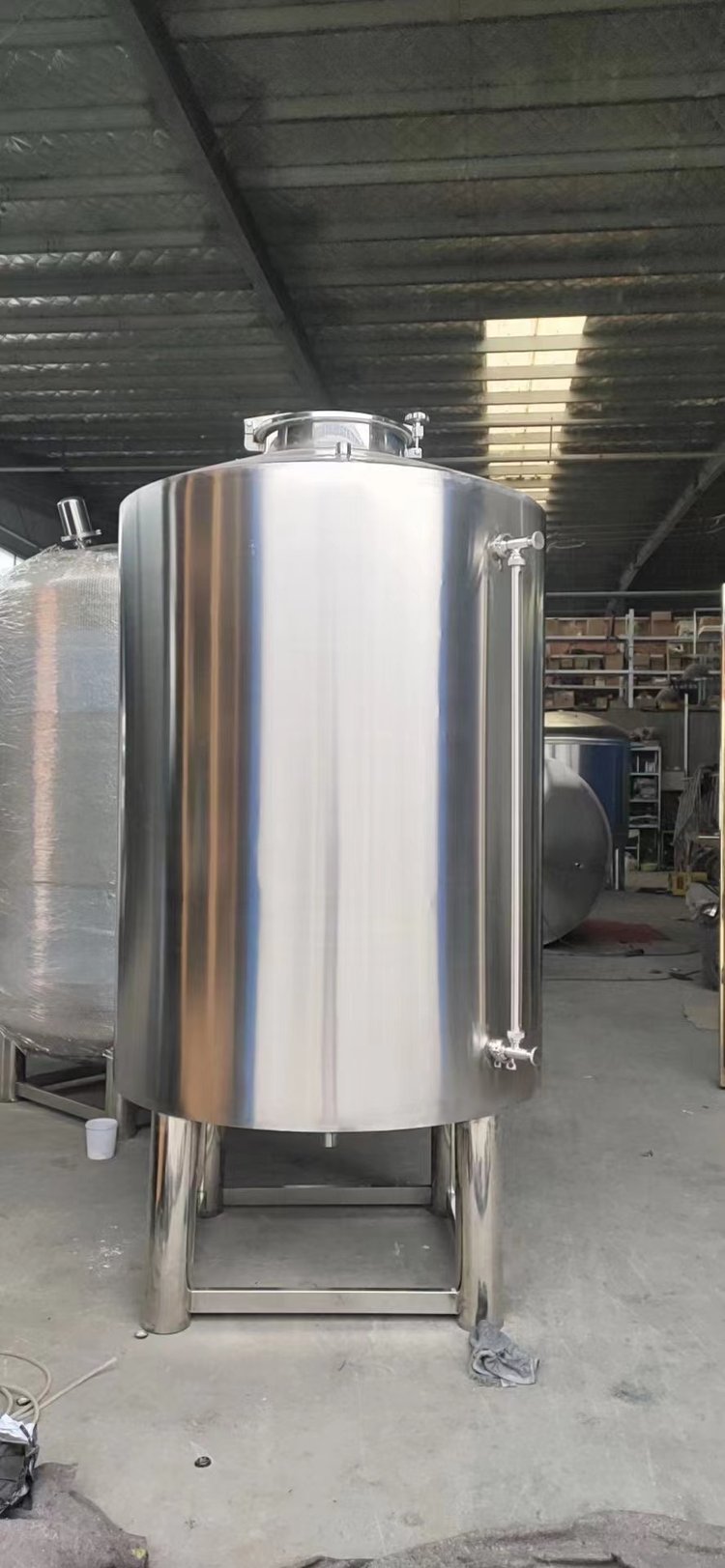
Ⅰ.Raw Water Tank: Used to regulate the supply of raw water and stabilize the inlet water pressure. Water treatment equipment requires a 304 stainless steel or PE vertical water tank. The tank is equipped with a water inlet, water outlet, overflow outlet, drain valve, and level transmitter.
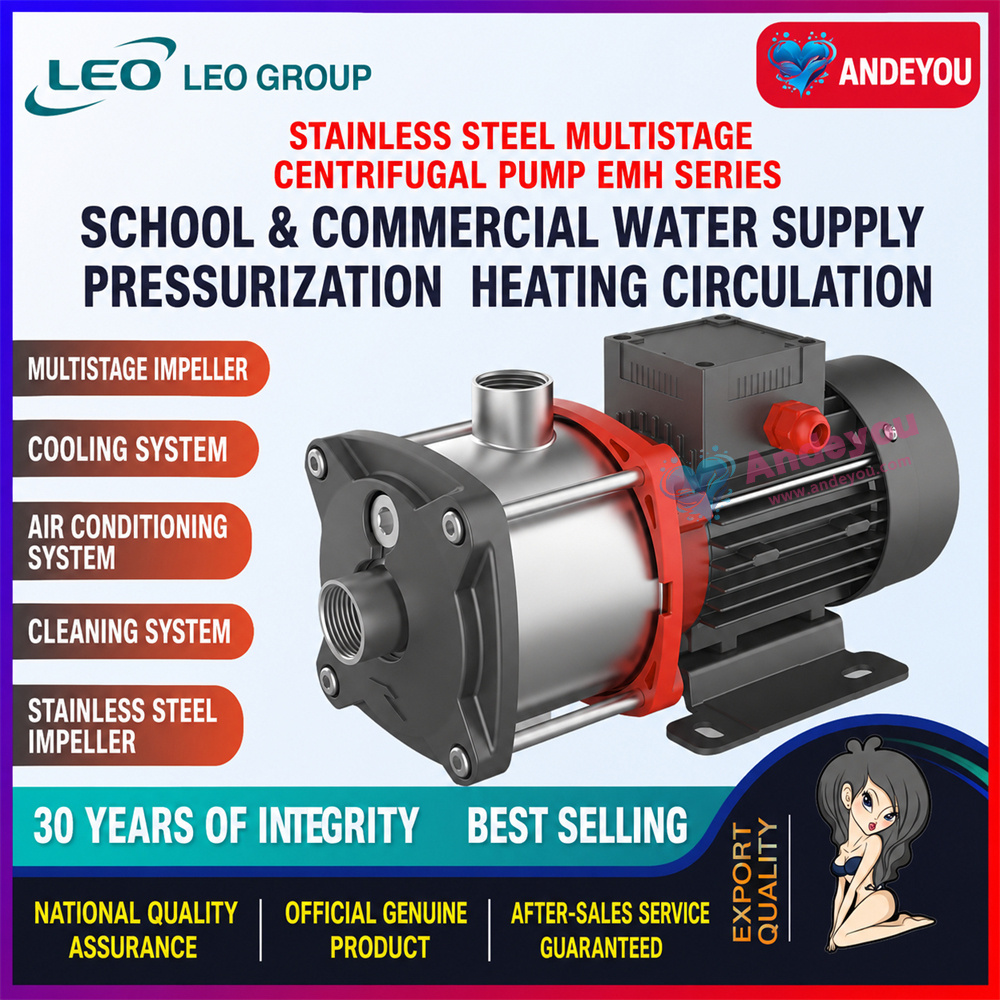
II. Raw Water Booster Pump: Used to provide stable driving pressure for pretreatment. It is recommended to use a horizontal or vertical multistage centrifugal pump made of stainless steel or engineering PP plastic. Select a suitable water pump according to the pipe diameter, flow rate, and pressure between the raw water and pretreatment systems.
Overview of Pretreatment Functions:
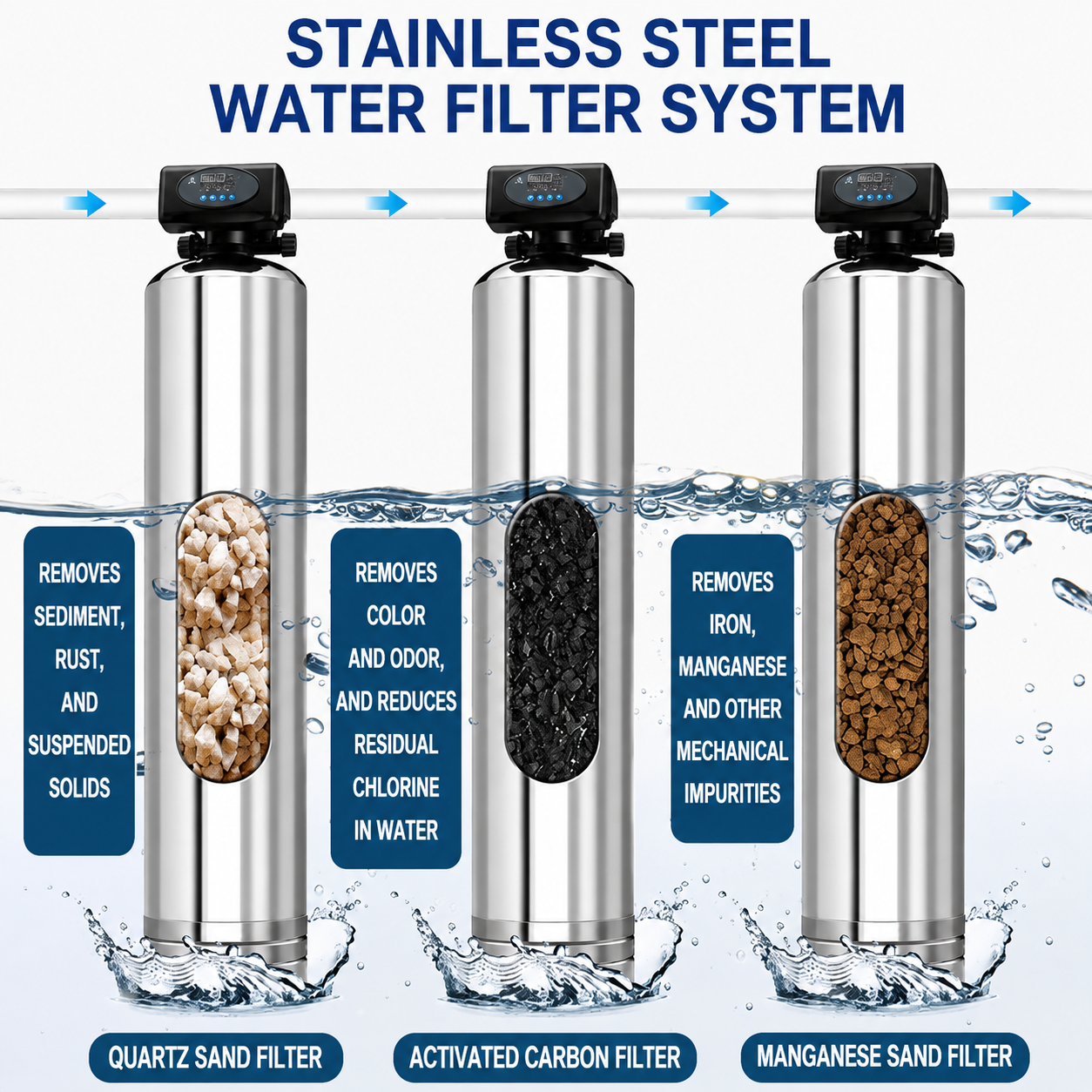
III. Sand Filter / Multimedia Filter: A multimedia filter is a pressure-type filter that uses refined quartz sand and other media filled inside the filter as filtration materials. Whether water flows from top to bottom or pressure is applied from bottom to top, suspended matter and colloidal particles are removed as water passes through the filter bed, thereby reducing turbidity. The filtration media are diverse, and different media are used for different water qualities. Common media include quartz sand, anthracite, manganese sand, garnet, and others.
The media are consumables and need to be replaced regularly, usually according to the manufacturer's recommended cycle. Most are replaced once every 1–2 years.
Ⅳ.Activated Carbon Filter: Activated carbon mainly works through physical adsorption, but it can also perform selective adsorption, namely chemical adsorption. In purified water production, activated carbon mainly serves five functions: reducing water oxidation potential, preventing organic matter from entering and contaminating RO membrane elements, removing residual chlorine from water, and removing trihalomethanes (THMs). Colored water becomes clearer after passing through activated carbon, which is an immediately visible change.
Activated carbon is a consumable and needs to be replaced regularly. It should generally be replaced immediately when the filter cartridge becomes darker in color.
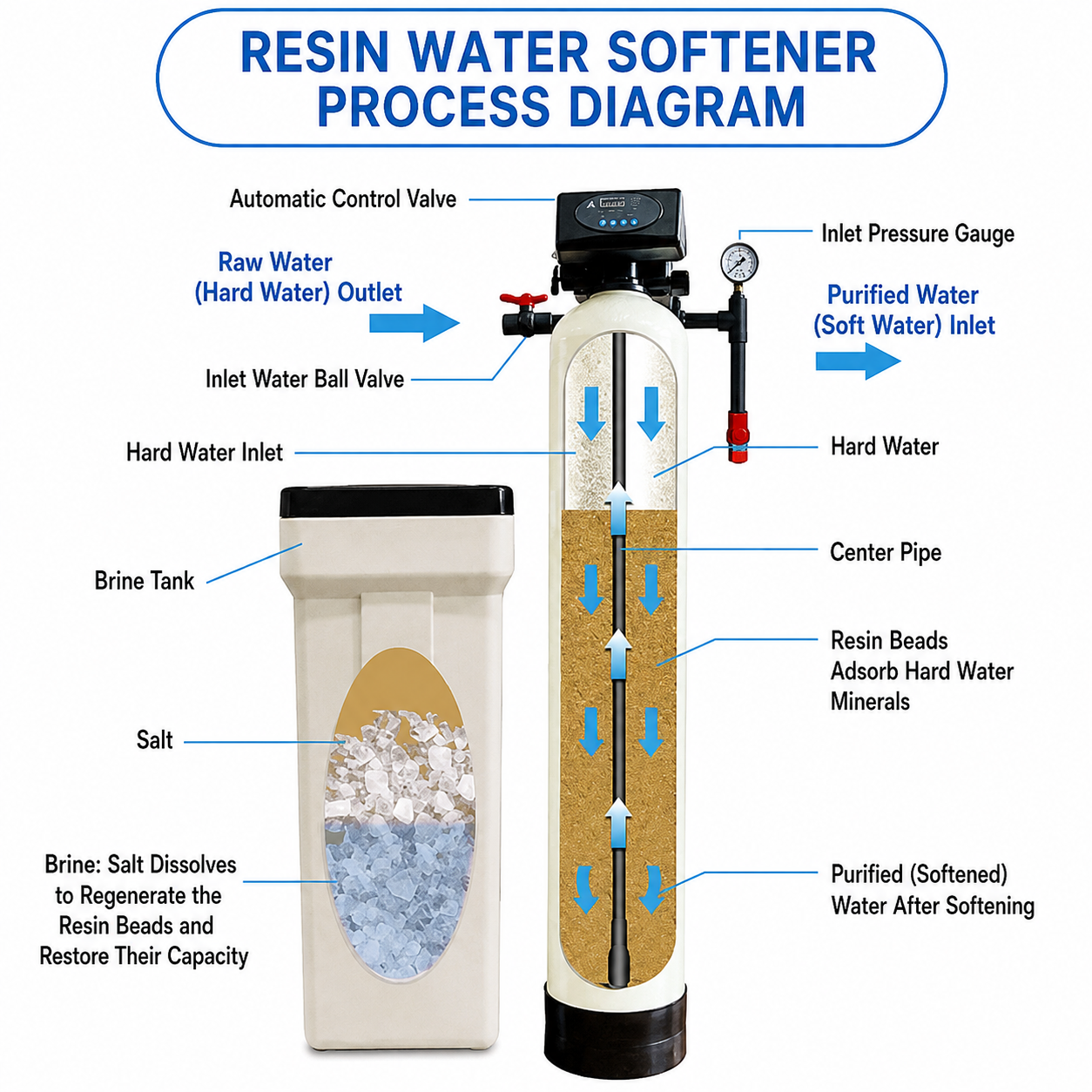
Ⅴ.Water Softener: Mainly used to remove calcium and magnesium ions from relatively hard water, thereby reducing water hardness and softening the water.
Working Principle: The fully automatic sodium-ion exchanger uses the principle of ion exchange to remove calcium, magnesium, and other scale-forming ions from water. When raw water containing hardness ions passes through the resin bed in the exchanger, calcium and magnesium ions in the water are exchanged with sodium ions adsorbed by the resin. The resin adsorbs calcium and magnesium ions while sodium ions enter the water, so the water flowing out of the exchanger is softened water with reduced hardness.
As the exchange process continues, the resin becomes saturated with calcium and magnesium ions and its exchange capacity decreases. When it loses its softening exchange capacity, the resin needs to be regenerated. A regenerant (brine, NaCI) containing a large amount of sodium ions is used to replace the calcium and magnesium ions adsorbed by the resin. The resin then adsorbs sodium ions again and its softening exchange capacity is restored.
Reaction Example: 2RS-Na + Ca²⁺ → RS₂Ca + 2Na⁺
The fully automatic sodium-ion exchanger mainly consists of a controller (commonly PLC), centralized control valve, sodium-ion exchange vessel, salt tank, and accessories. Accessories include upper and lower water distributors, a central pipe, salt-delivery pipe, and drain pipe.
Regular maintenance is required, including resin replacement and adding salt to the salt tank. The resin replacement cycle is generally 2–5 years. Salt should be added to the salt tank every 2–3 months to maintain the salt level at 1/2 of the tank.
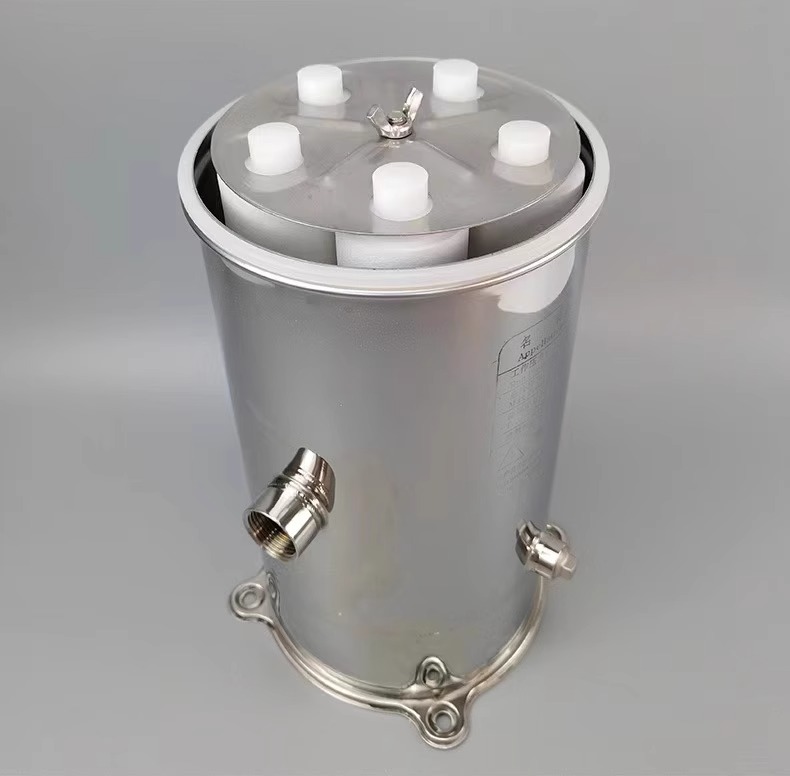
Ⅵ.Precision Filter: Used to intercept particles of approximately 5 μm (5 microns) and retain impurities that pass through the sand filter and activated carbon filter, effectively protecting the service life of the RO membrane.
Working Principle: Uses PP filter cartridges to remove impurities through depth filtration and surface interception inside the filter, achieving solid-liquid separation. The solids can be discharged through a backwashing device.
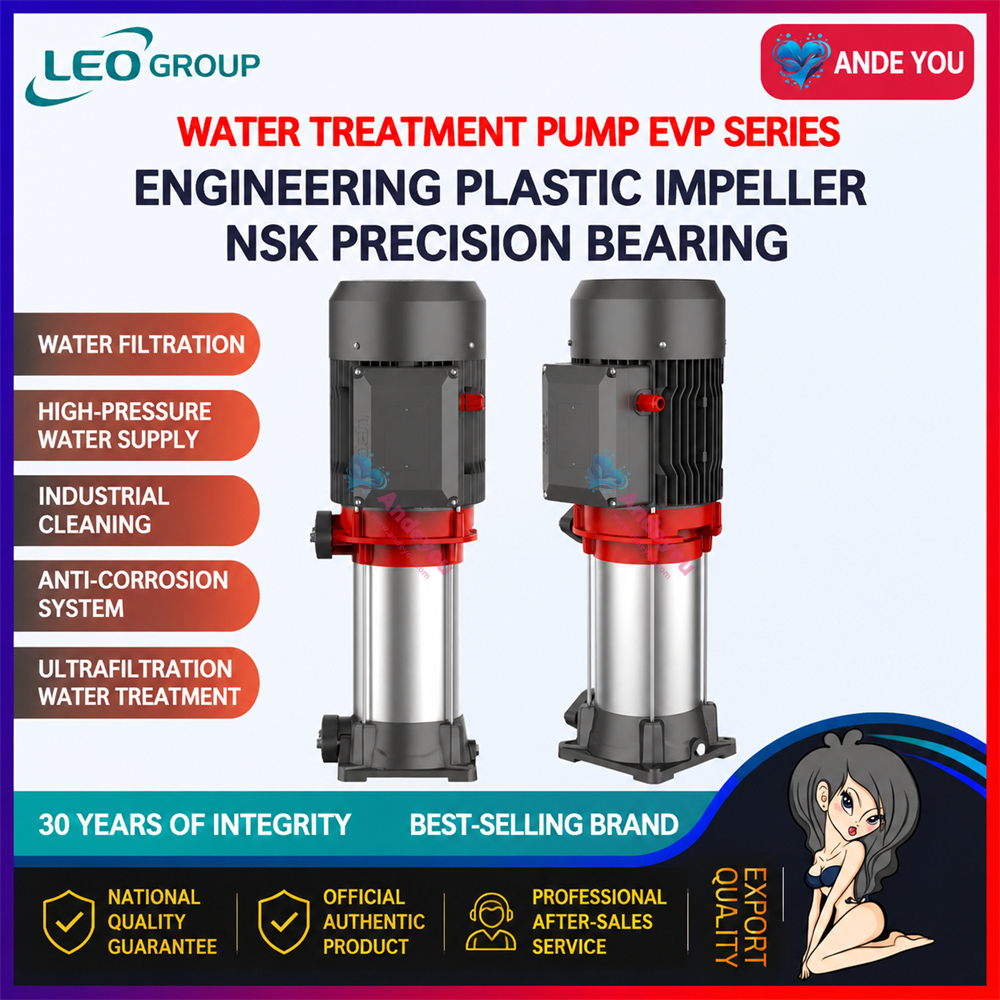
VII. High-Pressure Pump: Provides the driving pressure for the RO membrane so that water molecules can pass through the RO membrane. A vertical multistage pump is commonly used, made of stainless steel or engineering plastic.
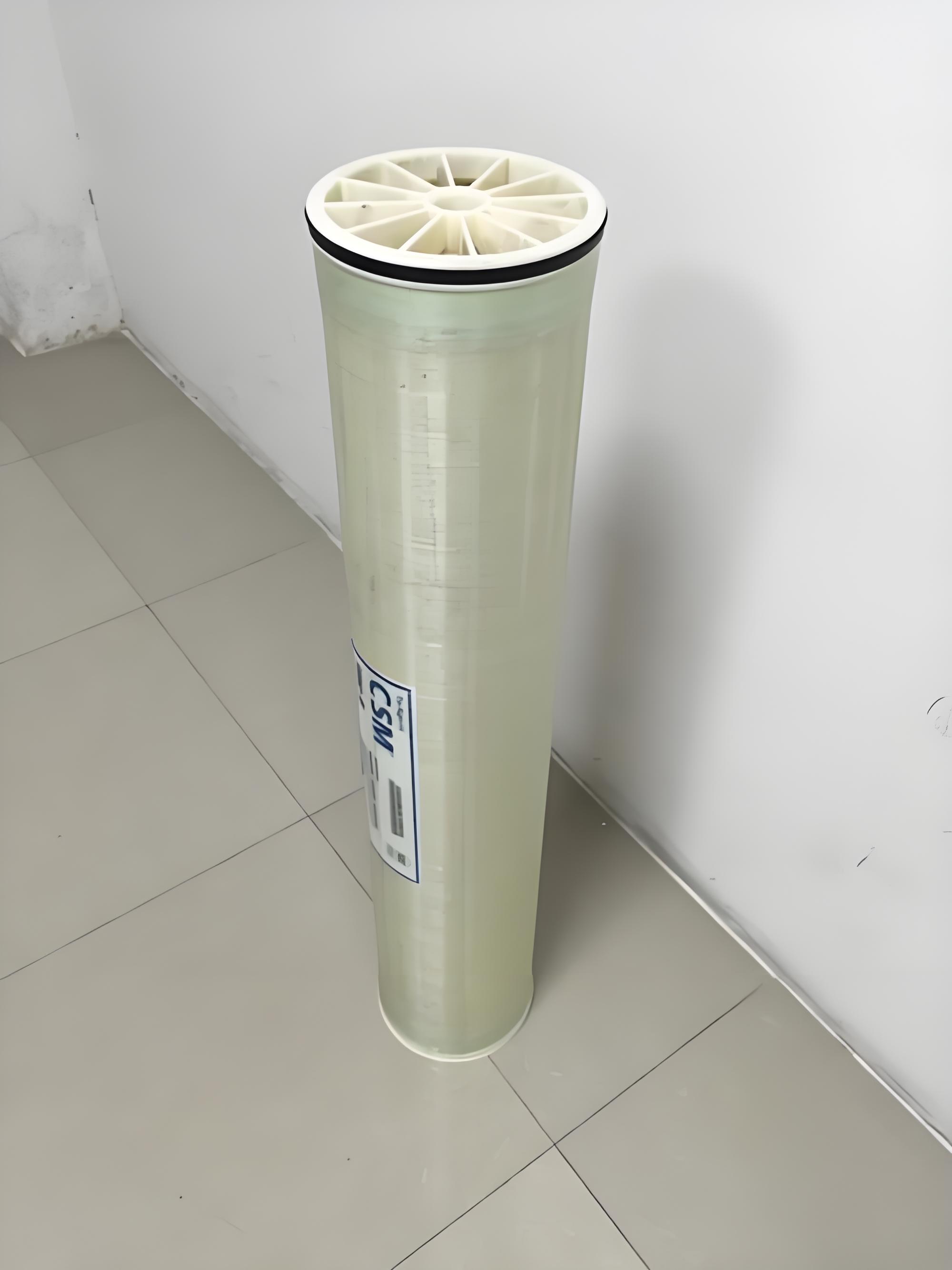
VIII. RO Reverse Osmosis Membrane: Reverse osmosis is the reverse migration of osmosis. Under pressure, it uses the selective retention of a semipermeable membrane to separate solutes from solvents in a solution. High-precision filtration uses a pore size of 0.0001 microns (one-millionth of the diameter of a human hair) and can effectively remove heavy metals, bacteria and viruses, pesticide residues, organic pollutants, and other substances. Desalination treatment retains salts.
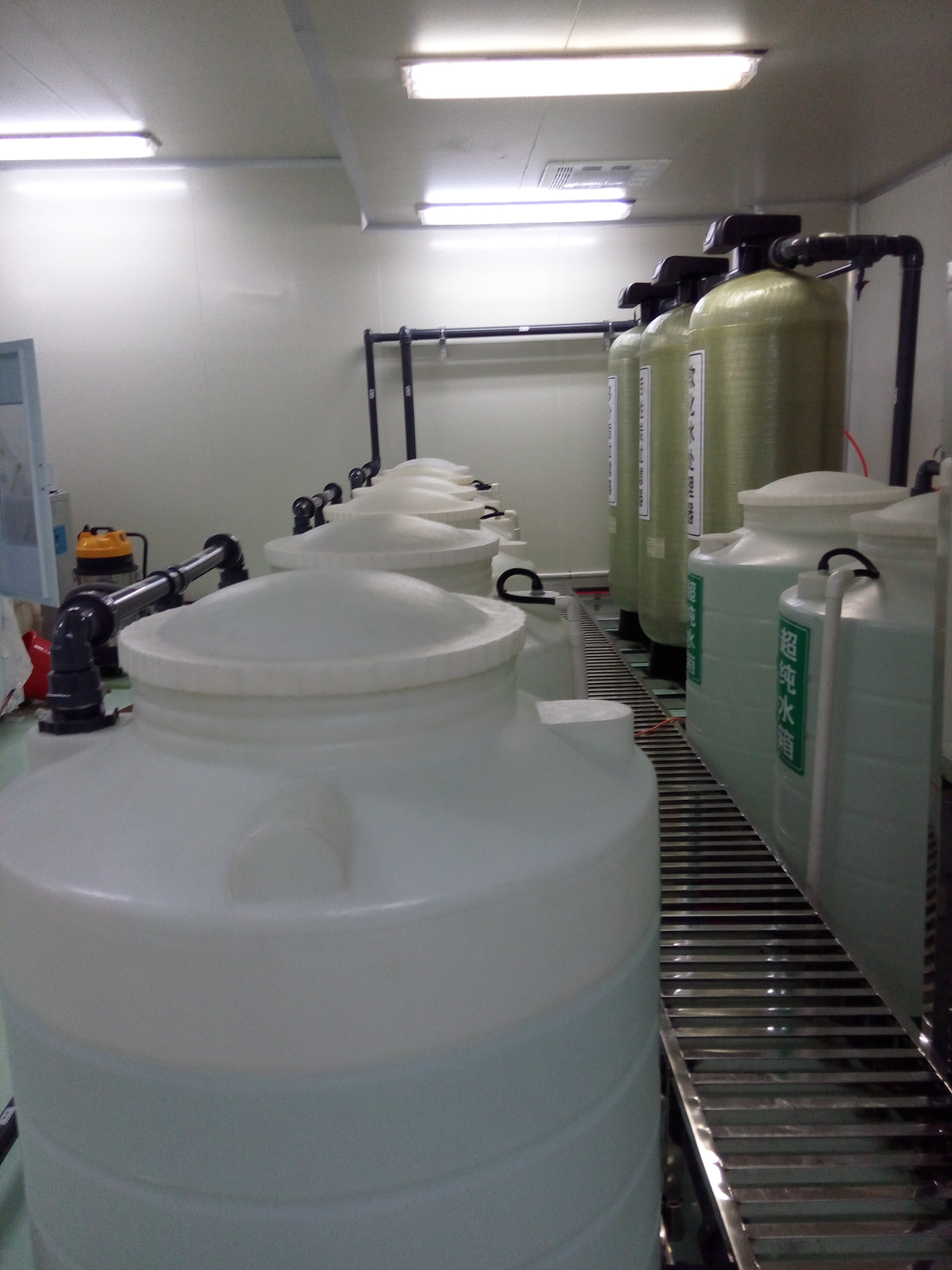
Ⅸ.Pure Water Tank: Stabilizes the supply of purified water to the end-use points. The tank is equipped with water inlet and outlet ports, an overflow outlet, a drain valve, and a level transmitter. Common materials are stainless steel or PE.
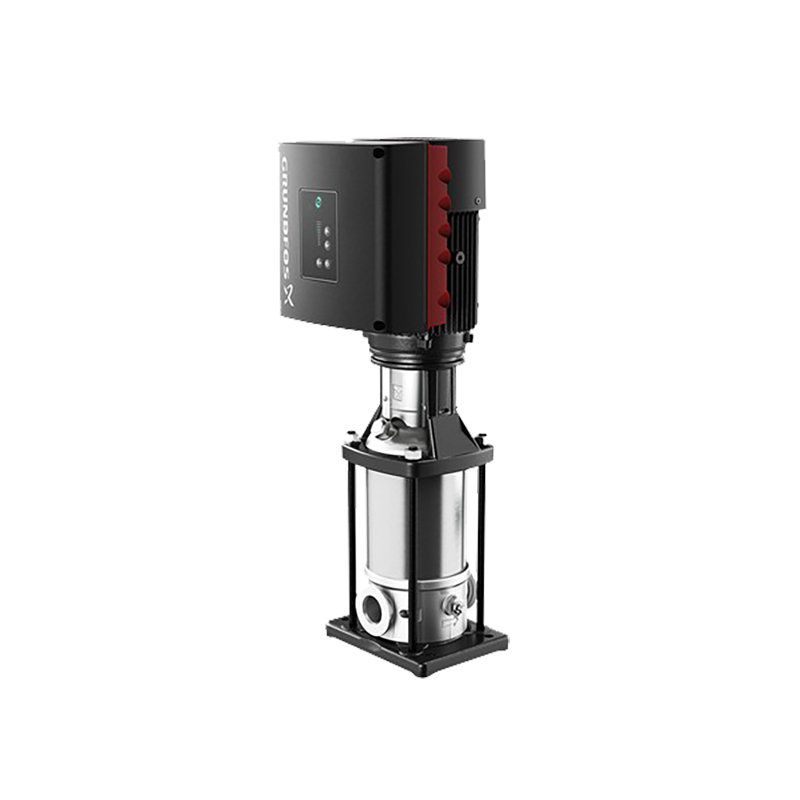
Ⅹ.Variable-Frequency Booster Pump: Ensures water pressure at the end-use points. Common options include stainless steel horizontal multistage pumps and stainless steel vertical multistage pumps. The pumps can be equipped with variable-frequency drive control. Select the appropriate pipe diameter, flow rate, and head range according to actual usage to maintain constant pressure at the end-use points.
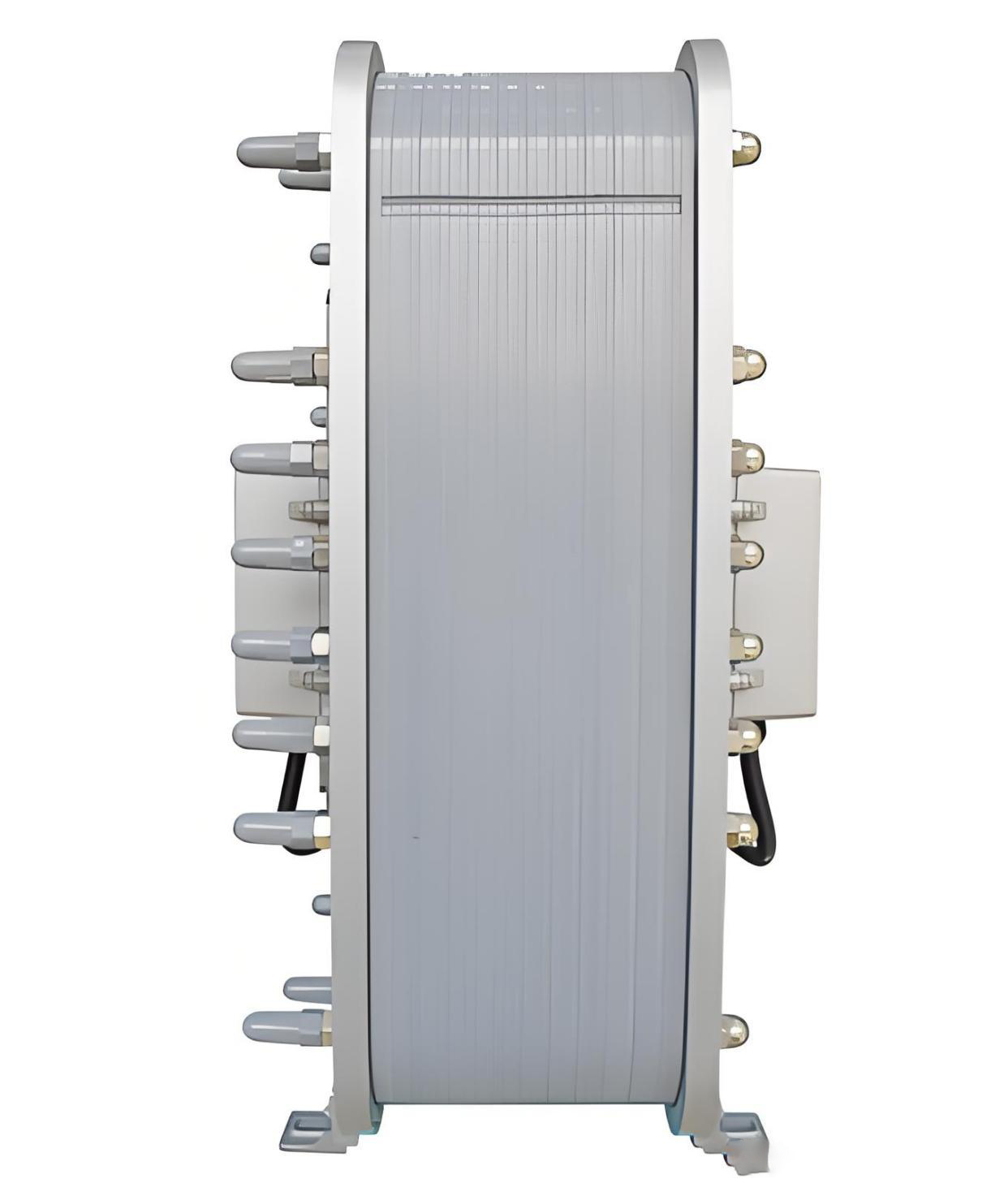
ⅩⅠ.EDI Module: Achieves deep desalination through electrochemical and ion-exchange technologies. Under the action of direct current, anion/cation exchange membranes selectively migrate ions, allowing the resistivity in the dilute-water chamber to reach 15–18 MΩ and meet ultrapure water standards. The resin is continuously regenerated; H⁺/OH⁻ produced by water dissociation automatically regenerates the resin, eliminating the need for chemical agents (acid/alkali regeneration) and enabling zero-pollution operation. It removes multiple pollutants and can reduce silica and TOC levels.
The above is the process flow of reverse osmosis equipment, which enables tap water to meet drinking water standards.
